


Problem & Solution
Accurate linear measurements are critical in machining, fabrication, and mechanical fitting, where minor dimensional discrepancies can compromise component fitment or structural integrity. Standard rulers and basic measuring tapes lack the jaw alignment and fine resolution required for tight-tolerance work, particularly when measuring internal bores or blind depth holes.
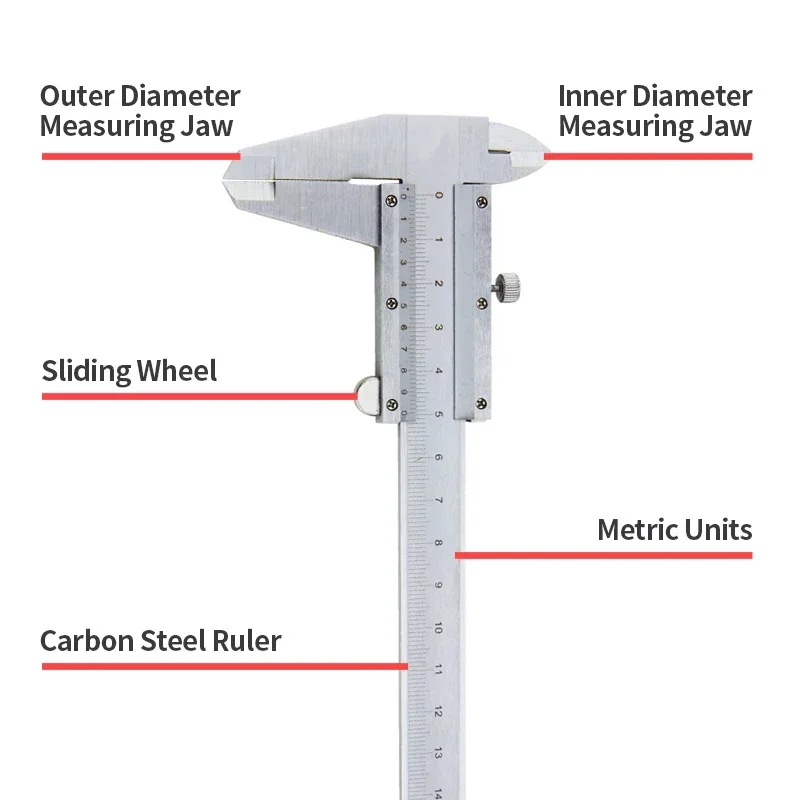
This carbon steel vernier caliper provides a purely mechanical solution without reliance on batteries or delicate digital screens. Engineered for four distinct measurement methods—external dimensions, internal dimensions, depth, and step distances—it offers versatile measurement capabilities suitable for workshop and industrial settings.
Who Is It For?
Designed for machinists, mechanics, woodworkers, technicians, and DIY hobbyists who require precise physical measurement tools for component verification, fitting, or fabrication.
It is particularly tailored for users who prefer traditional manual optical scale reading over electronic digital calipers, avoiding potential downtime caused by battery depletion or sensor failure in dirty, oily, or dusty workshop environments.
Key Features
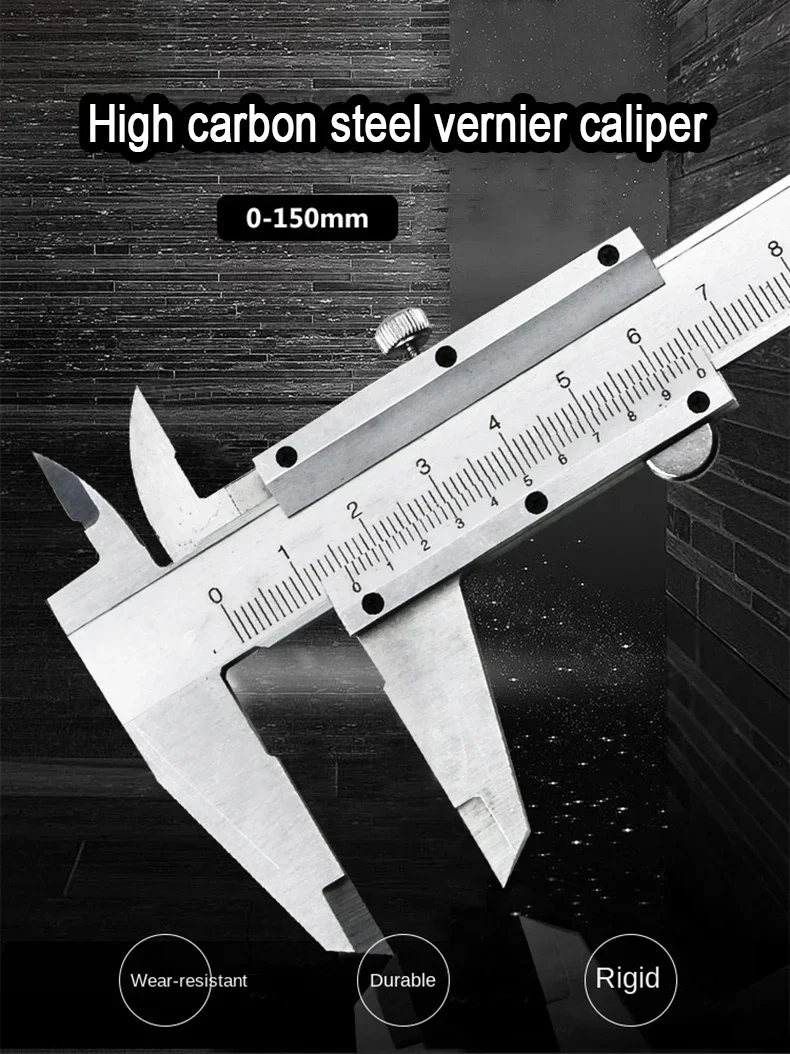
- Carbon Steel ConstructionProvides robust structural rigidity to maintain alignment under standard jaw pressure.
- Four-Way Measurement CapabilityConfigured to measure external diameters, internal dimensions, depth, and step heights with a single body.
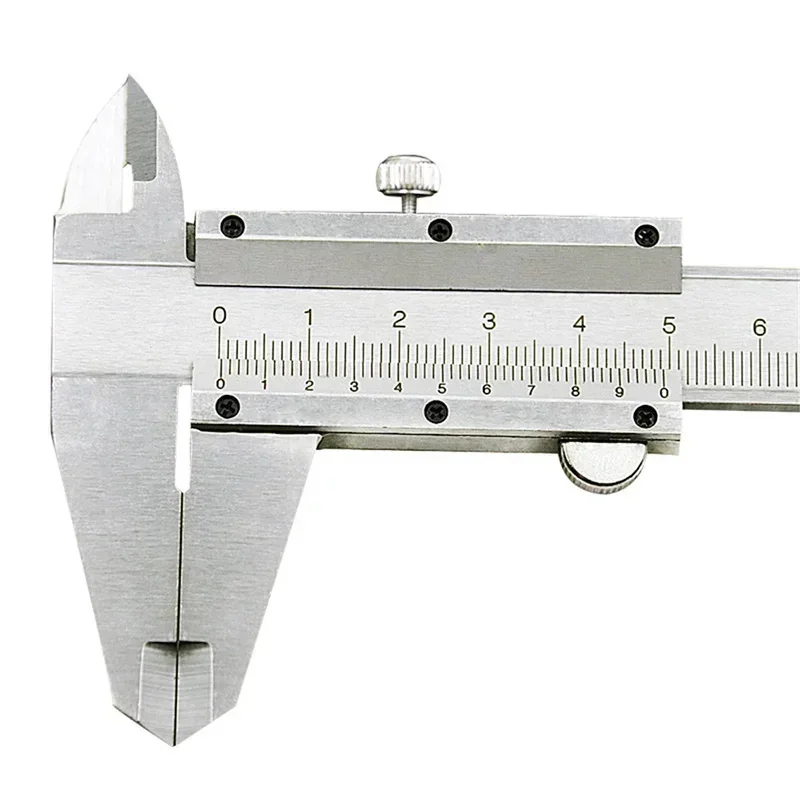
- Engraved Metric ScaleFeatures permanently marked metric graduations along the beam and vernier slide for direct reading.
- Mechanical Non-Digital DesignOperates purely mechanically without batteries, circuit boards, or moisture-sensitive electronics.
- Jaw Locking MechanismIncludes a thumb screw on the slider to fix the caliper position when taking comparative or transfer measurements.
Technical Specifications
| Tool Type | Vernier Caliper |
| Material | Carbon Steel |
| Measurement Units | Metric |
| Measurement Modes | 4-Way (External, Internal, Depth, Step) |
| Operation Type | Manual Mechanical (Non-Digital) |
| Power Source | None (No battery required) |
Pros & Cons
Pros
- Durable carbon steel body resists flexing during routine workshop measurements.
- Battery-free mechanical design ensures reliable operation in oily or wet environments.
- Four-way measuring geometry covers standard internal, external, depth, and step applications.
Cons
- Requires manual optical reading of the vernier scale, which demands adequate visual clarity and experience.
- Carbon steel requires light lubrication and dry storage to prevent surface rust over time.
- Does not feature automatic metric/imperial conversion or digital zero-resetting functionality.
FAQ
No, this tool operates purely mechanically using engraved linear scales, so it does not use batteries or electronic parts.
It can perform external (outer diameter/width), internal (inner slot/bore diameter), depth (using the rear depth rod), and step height measurements.
Keep the tool clean and free of abrasive dust. After use, wipe down the steel surfaces and apply a thin layer of machine oil before storing it in a dry area to prevent corrosion.
The product specifications explicitly state metric precision measuring capabilities.
Final Verdict
A practical choice for workshop technicians and craftspeople seeking a mechanical measuring tool made from carbon steel. It excels in harsh shop conditions where digital tools struggle, provided the user is comfortable reading manual vernier scales and maintaining carbon steel tools.