Problem & Solution
Electronics hobbyists, makers, and repair technicians often require specific DC voltage rails (ranging from 5V up to 48V) to power custom DIY projects, routers, or specialized testing gear. Traditional benchtop power adapters can be bulky, while standard USB outputs default strictly to 5V unless negotiation occurs.
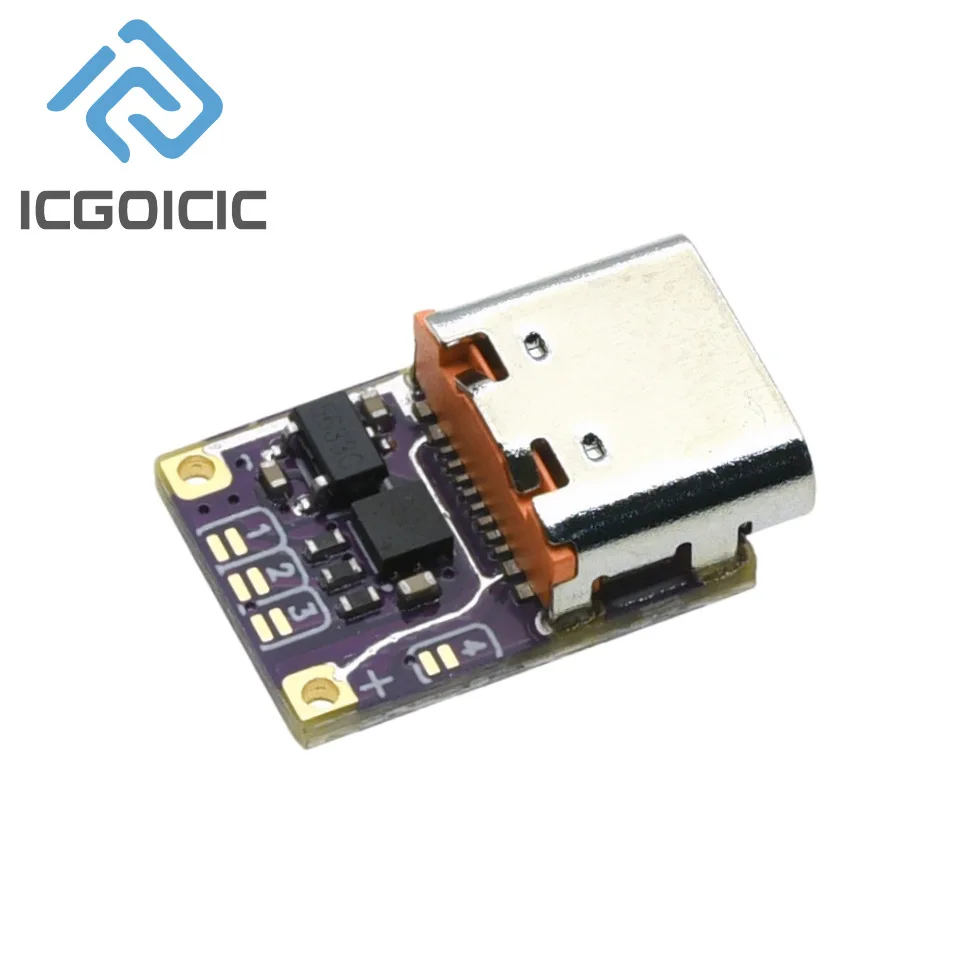
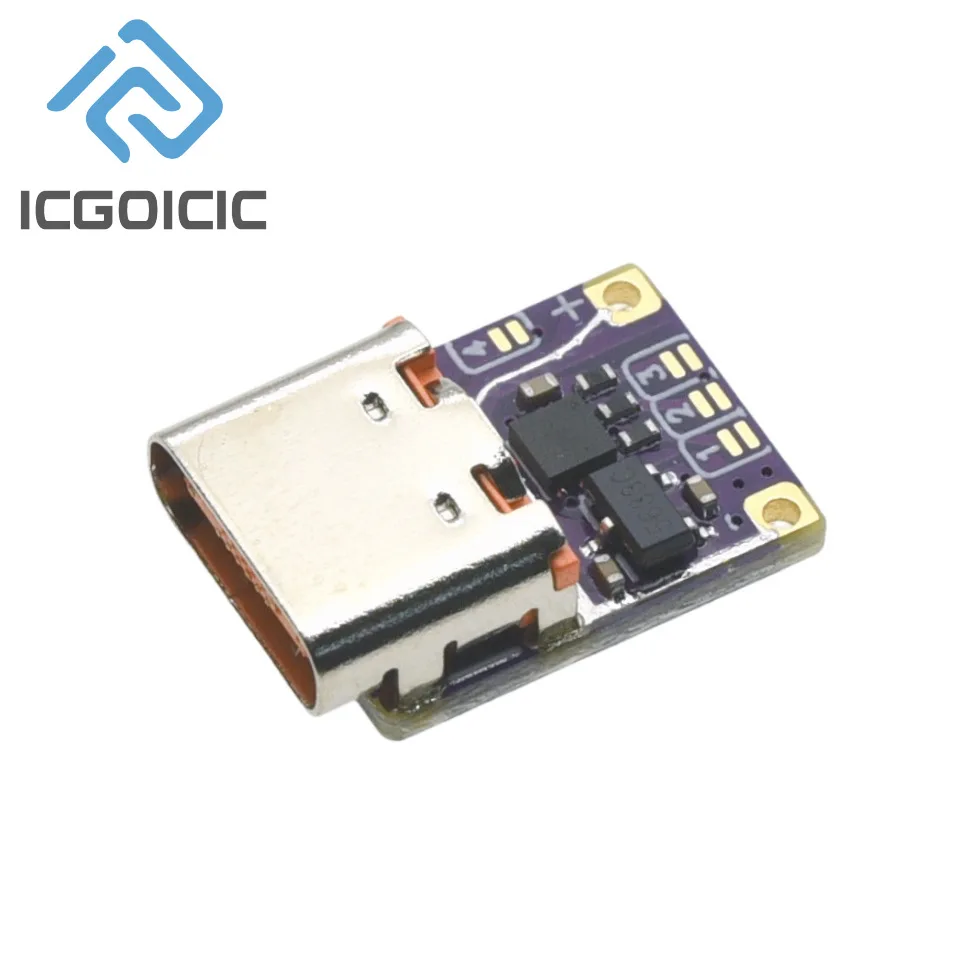
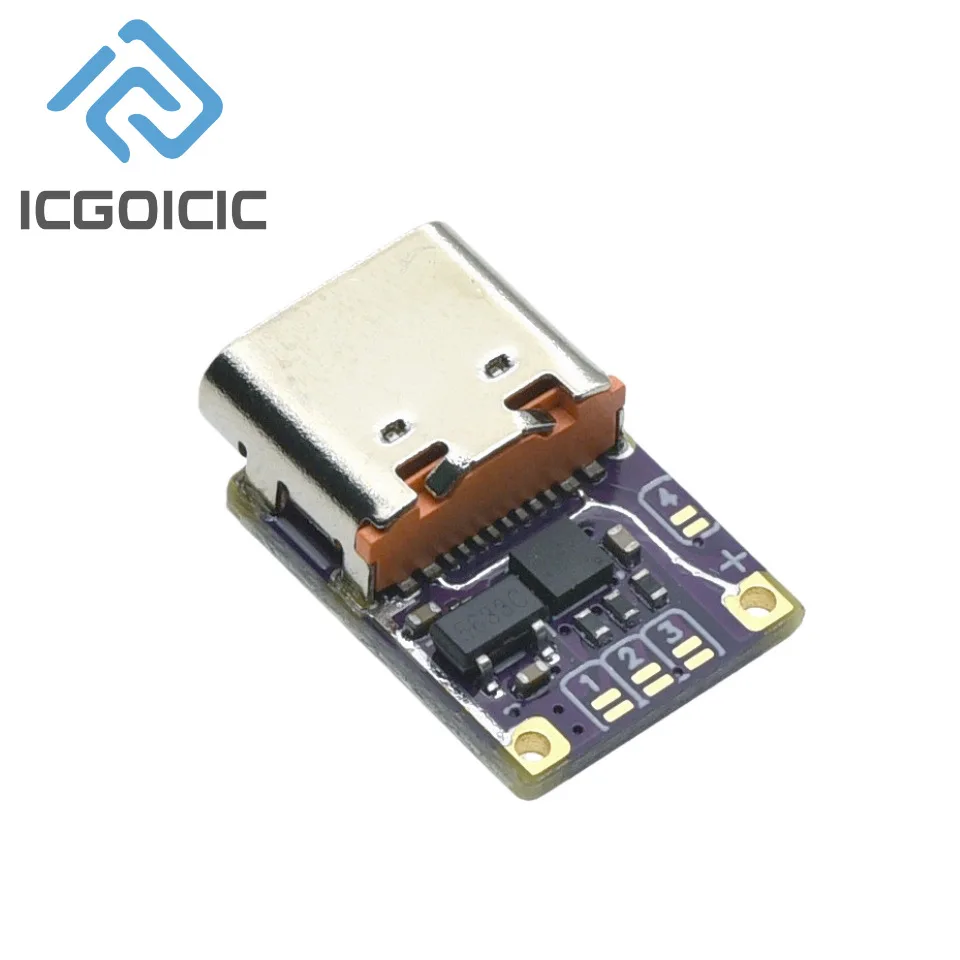
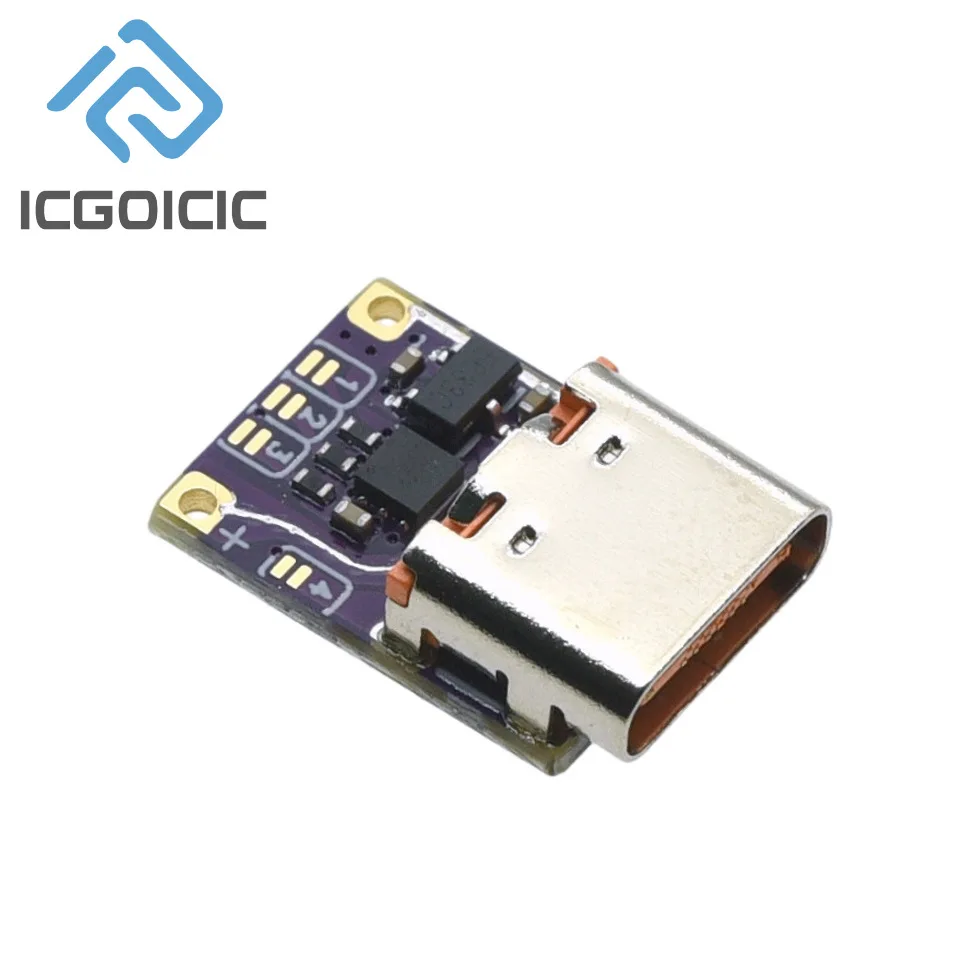
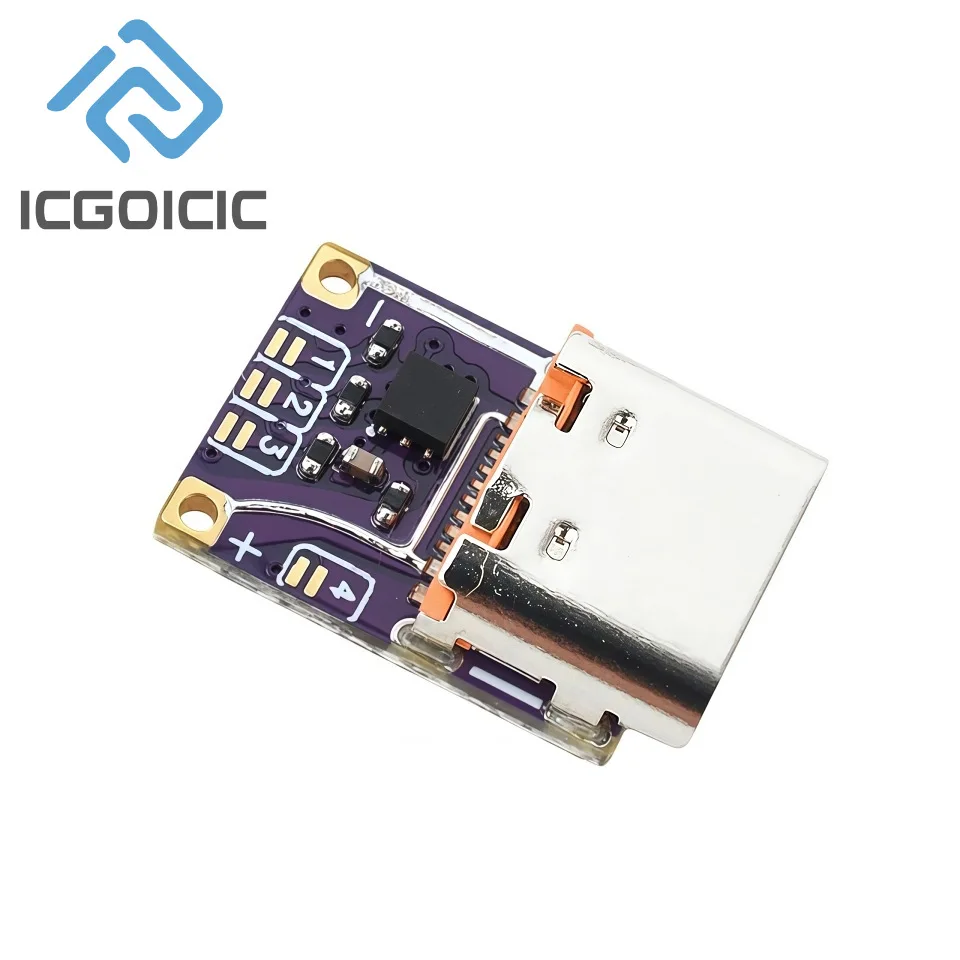
This PD3.0 / PD3.1 / QC3.0 deceiver fast charging module solves this limitation by spoofing protocol handshakes with modern USB Type-C chargers. It tricks the power source into outputting fixed target DC voltages directly through its interface, turning standard USB-C PD blocks into portable DC power supplies.
Who Is It For?
This product is aimed at hardware hobbyists, electronics engineers, and DIY builders who want to repurpose high-wattage USB Type-C fast chargers into fixed DC voltage sources for bench testing or custom enclosures.
It is suitable for those powering non-USB hardware—such as soldering stations, portable amplifiers, or network gear—provided they possess a compatible PD3.0, PD3.1, or QC3.0 power adapter.
Key Features
- Multi-Protocol CompatibilityWorks with PD3.0, PD3.1 Extended Power Range (EPR), and QC3.0 fast charging standards.
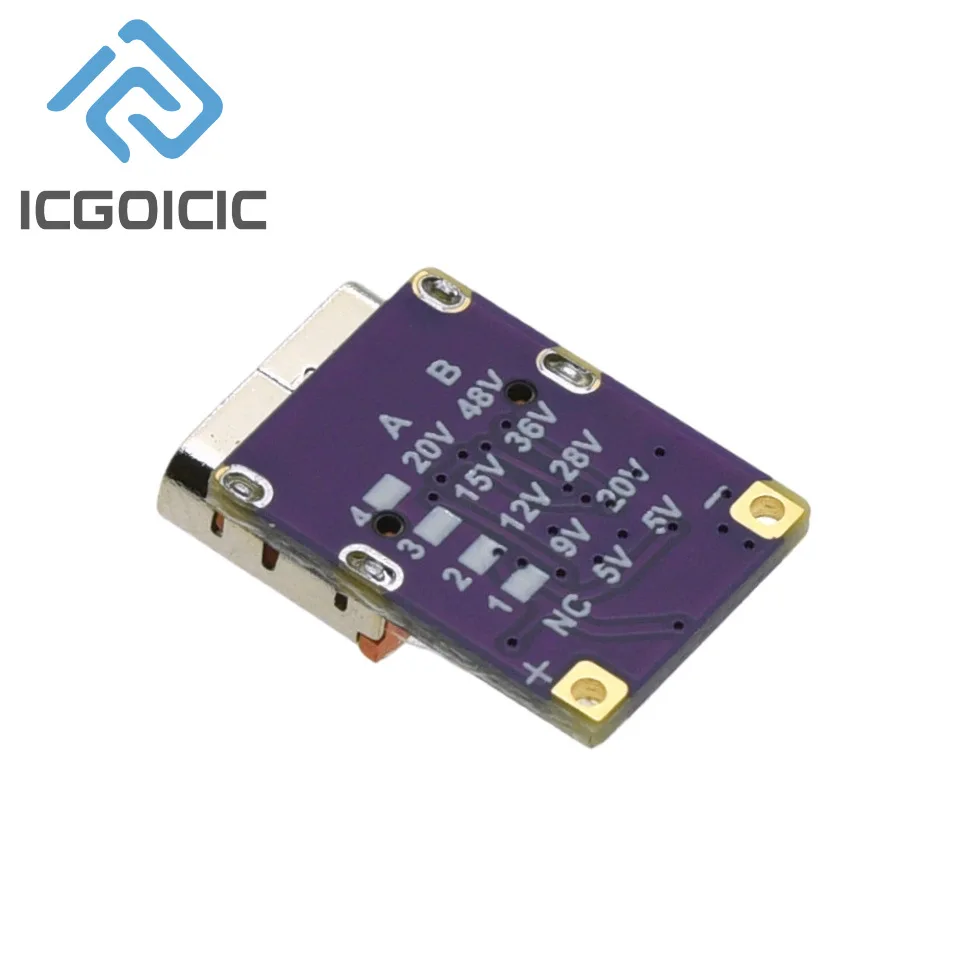
- Wide Voltage SelectabilityTriggers standardized DC outputs across 5V, 9V, 12V, 15V, 20V, 28V, 36V, and 48V profiles.
- USB Type-C InterfaceConnects directly with modern high-capacity power banks and USB-C wall adapters.
- Decoy Trigger FunctionalitySpoofs power delivery protocols to extract higher DC voltage tiers without needing heavy transformers.
Technical Specifications
| Supported Protocols | PD3.0, PD3.1, QC3.0 |
| Input Interface | USB Type-C |
| Triggerable Output Voltages | 5V, 9V, 12V, 15V, 20V, 28V, 36V, 48V |
| Module Type | Fast Charging Decoy / Voltage Trigger |
| Maximum Current Rating | Not specified in available data |
| Board Dimensions & Weight | Not specified in available data |
Pros & Cons
Pros
- Supports high-voltage PD3.1 EPR specifications up to 48V.
- Compatible with both USB Power Delivery and Quick Charge (QC3.0) protocols.
- Broad selection of standard trigger voltages (5V to 48V) for versatile hardware projects.
Cons
- Maximum continuous current throughput limit is not specified in available product data.
- Cannot generate requested voltage if the connected USB charger lacks native support for that specific profile.
- Requires careful verification of output wiring to prevent supplying high voltage to incompatible loads.
FAQ
No. The connected charger or power bank must explicitly support the PD3.1 EPR (Extended Power Range) 48V profile for the module to successfully trigger 48V.
No. This is a protocol trigger (decoy) board, not a step-up boost converter. It simply requests existing native output voltage profiles from the connected power source.
According to the product specifications, it supports PD3.0, PD3.1, and QC3.0 fast charging protocols.
The exact maximum current rating (amperage limit) is not specified in the available product data.
Final Verdict
Recommended for DIY makers and electronics technicians who own high-wattage USB PD3.0/PD3.1 chargers and need direct DC voltage taps (5V to 48V) for custom hardware. Skip this module if you are looking for an active voltage booster or step-down converter that regulates voltage independently of the charger. Before buying, verify that your USB-C adapter natively supports the target voltage level you intend to trigger.