

Problem & Solution
When designing compact DIY electronics, robotics, or IoT devices, traditional LCD screens can be bulky, power-hungry, and difficult to read in dim light. Makers often struggle to output crucial status data or sensor readings without cluttering circuit designs or draining battery reserves.
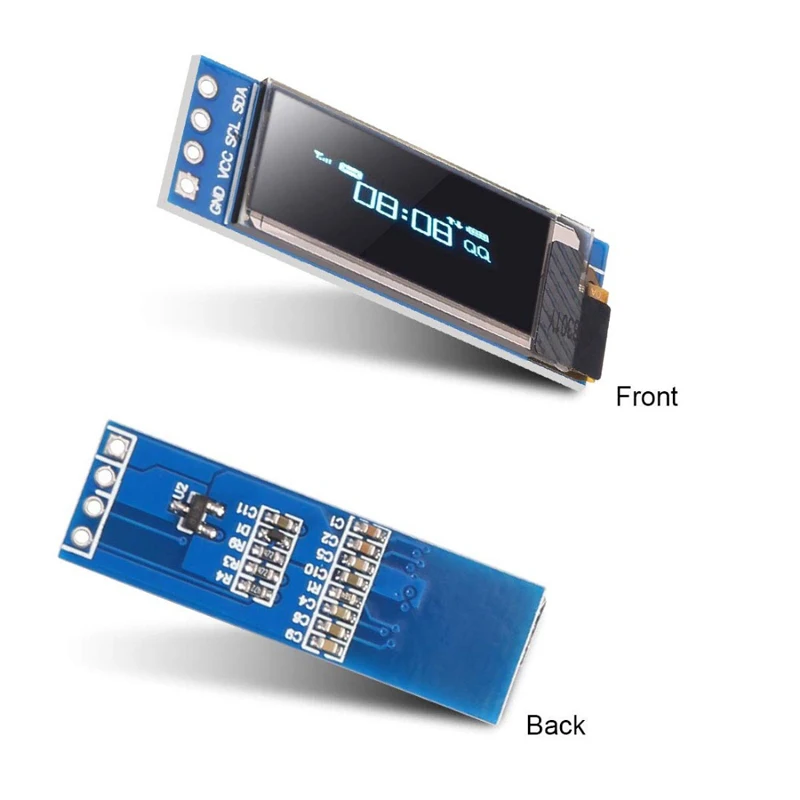
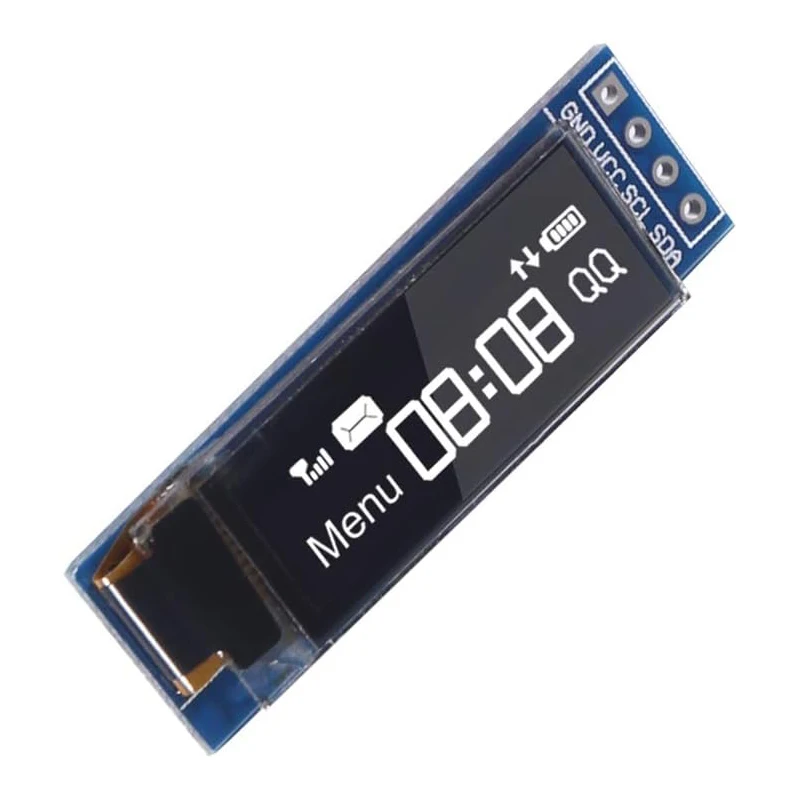
This 0.91-inch I2C SSD1306 OLED display module solves those spatial and power constraints effortlessly. Featuring self-emitting pixel technology, it eliminates the need for a bulky backlight while producing sharp, vibrant contrast. Operating smoothly across a 3.3V to 5V DC input range, it communicates over a streamlined 2-wire I2C bus.
By adding this compact display to your setup, you gain instant visual output for diagnostic messages, telemetry, and mini custom menus, turning raw prototyping projects into clean, user-friendly hardware.
Who Is It For?
This display module is tailored for electronics creators, STEM students, robotics enthusiasts, and IoT developers building custom micro-devices. It is also ideal for makers who need an affordable, energy-efficient display screen that integrates quickly into Arduino, ESP32, or Raspberry Pi environments.
Key Features
- 0.91-Inch Monochrome OLED ScreenDelivers crisp, high-contrast text and graphic outputs that remain readable under varying light conditions.
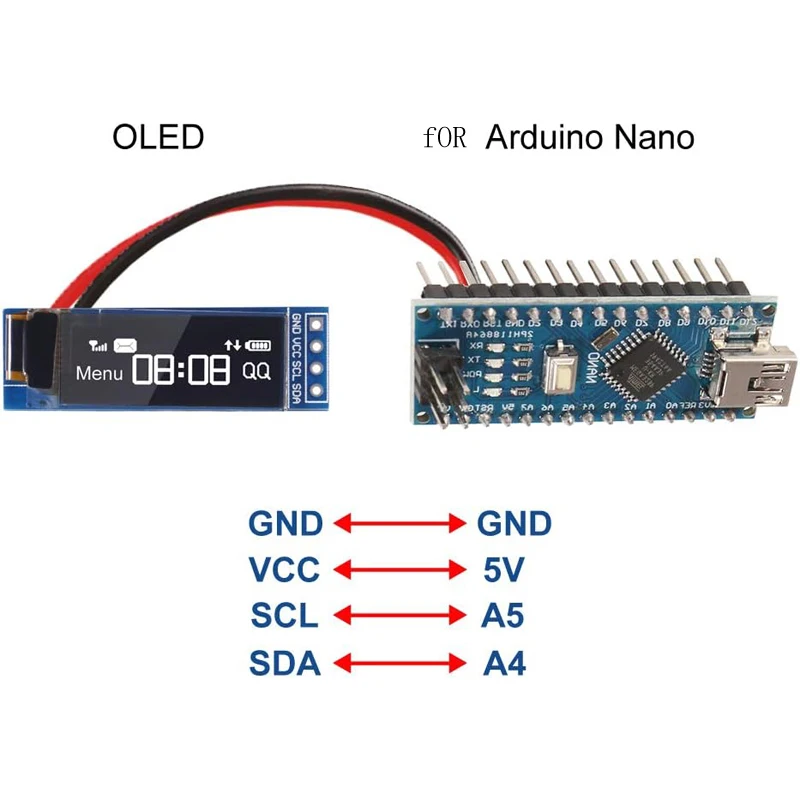
- SSD1306 Driver with I2C InterfaceRequires only two communication pins (SCL/SDA), saving valuable GPIO pins on your microcontroller.
- Wide Operating Voltage (DC 3.3V~5V)Connects directly to both 3.3V logic platforms like ESP32 and standard 5V Arduino development boards.
- Self-Emitting Light PixelsOperates without a backlight, keeping overall power consumption extremely low for battery-powered builds.
- Compact Form FactorFits snugly into small project enclosures without adding unnecessary bulk or weight.
- 128x32 Pixel ResolutionDisplays multi-line numerical readings, text status updates, and custom diagnostic icons clearly.
Pros & Cons
Pros
- Ultra-low power operation makes it ideal for portable, battery-driven electronics
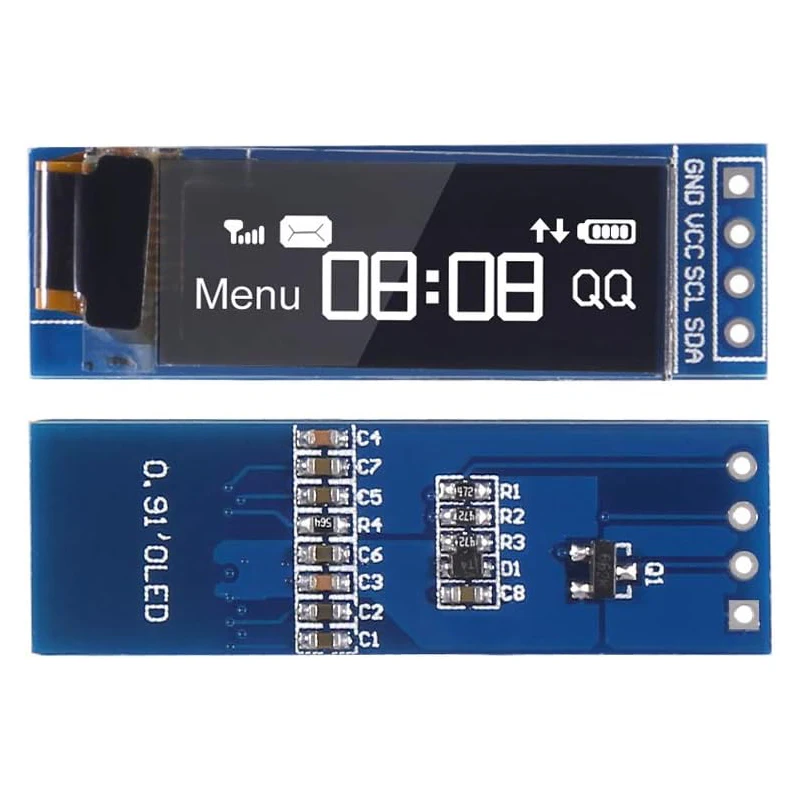
- Simple 4-pin connection (VCC, GND, SCL, SDA) streamlines wiring work
- Bright, high-contrast display offers excellent viewing angles
- Widely supported by standard open-source microcontroller libraries
Cons
- Small 0.91-inch display area limits complex graphical interfaces
- Single-color output (available in dedicated monochrome white or blue versions)
FAQ
It features an onboard voltage regulator supporting an input range from 3.3V to 5V DC, making it versatile for diverse microcontroller boards.
It uses the I2C serial protocol, requiring only 4 physical connections: VCC, GND, SCL, and SDA.
It is fully compatible with popular, lightweight open-source libraries such as Adafruit SSD1306, U8g2, and SSD1306Ascii.
No, OLED technology emits light at every individual pixel, eliminating the need for a backlight and minimizing energy usage.
Final Verdict
The 0.91-inch I2C SSD1306 OLED module is an essential, reliable hardware addition to any developer's project kit. Combining ultra-low power usage, wide 3.3V–5V compatibility, and excellent contrast, it delivers unmatched value for compact digital diagnostic displays and custom microcontroller projects.