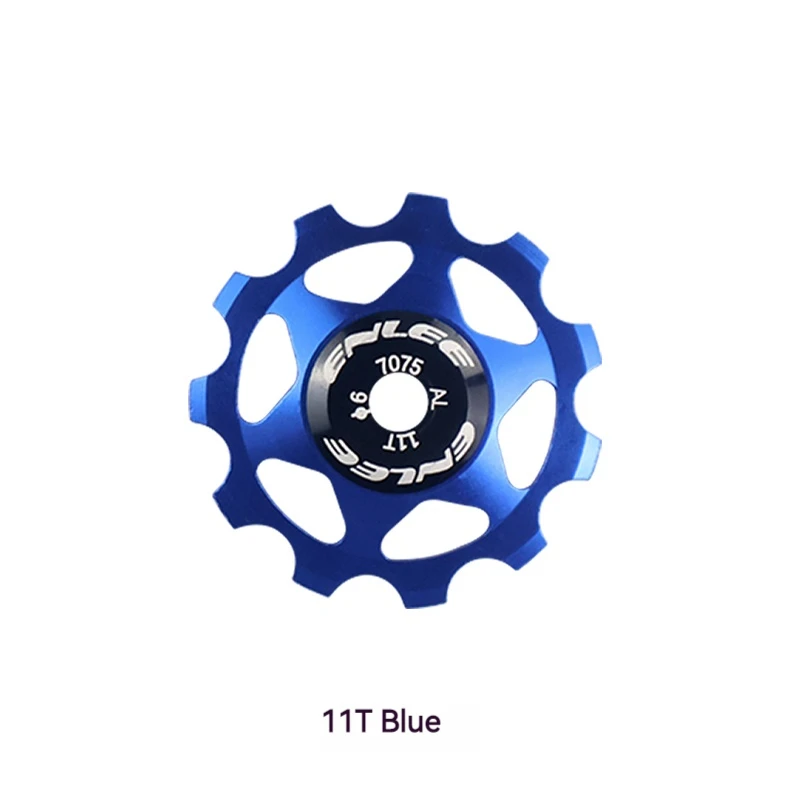
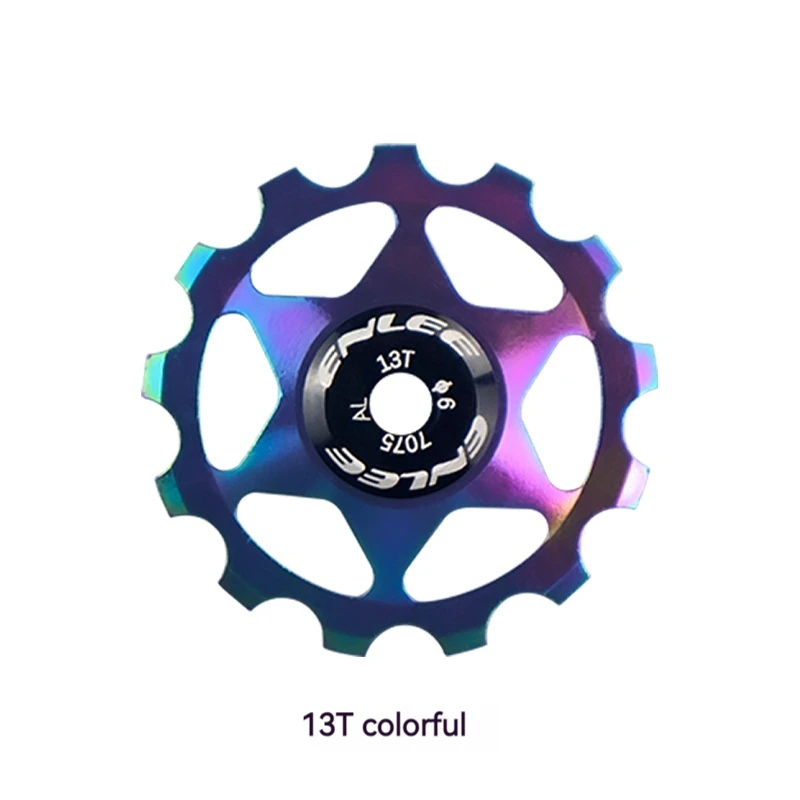
ENLEE Bike Rear Derailleur Pulley Review: 11T & 13T Ceramic Wheel
Problem & Solution
Stock composite or plastic jockey wheels on mountain bikes wear down over time, developing side-to-side wobble that leads to imprecise shifting, delayed gear engagement, and extra drag in the drivetrain. Furthermore, stock sleeve bushings often trap dirt and mud, increasing friction during long rides.
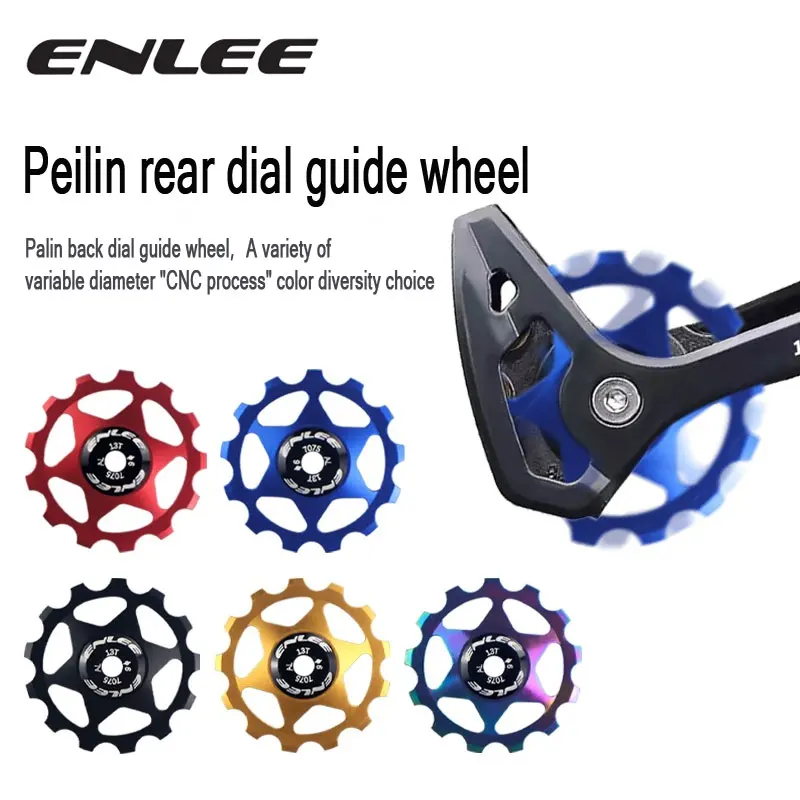
The ENLEE Aluminum Alloy Guide Wheel Pulley solves this by pairing a rigid CNC-machined aluminum body with smooth ceramic bearings. The stiffer alloy teeth provide crisp chain engagement, while the ceramic core reduces drag and resists corrosion caused by moisture and trail debris.
Who Is It For?
This pulley is designed for mountain bike riders, road cyclists, and home bike mechanics looking to upgrade or replace worn stock rear derailleur jockey wheels.
It is ideal for cyclists seeking smoother drivetrain spin and sharper gear changing using standard 4mm, 5mm, or 6mm derailleur mounting bolts, without purchasing an entirely new rear derailleur.
Key Features
- Aluminum Alloy ConstructionProvides superior structural rigidity and wear resistance compared to standard plastic OEM pulleys.
- Ceramic Bearing CoreDelivers smooth rotation with lower friction and inherent rust resistance for outdoor riding.
- 11T and 13T Tooth OptionsAllows exact matching with stock derailleur specifications or custom drivetrain setups.
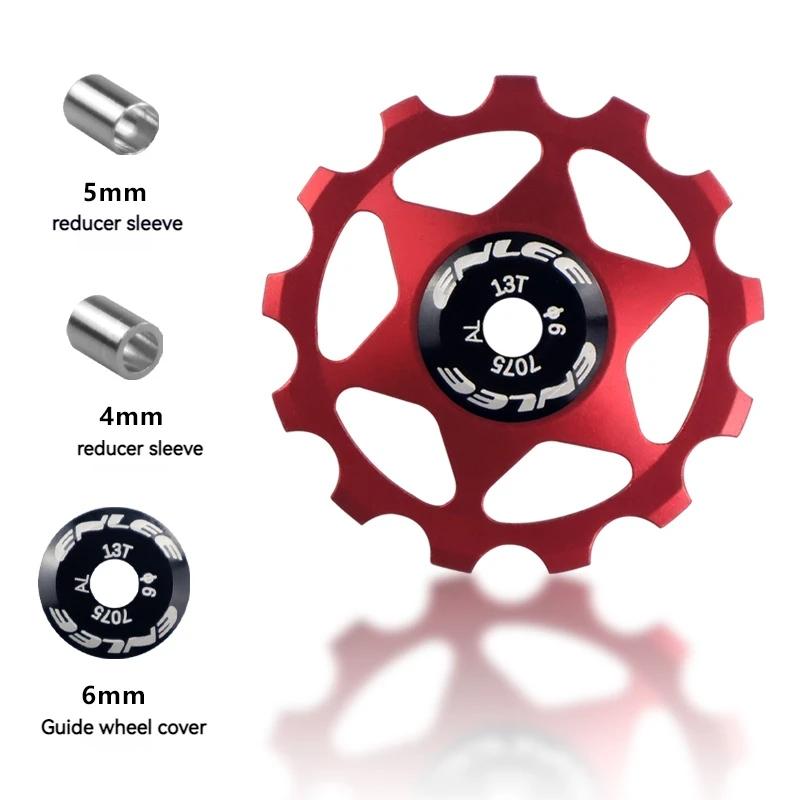
- 4mm / 5mm / 6mm Adapter BushingsEnsures broad mounting fitment across standard derailleur bolt diameters.
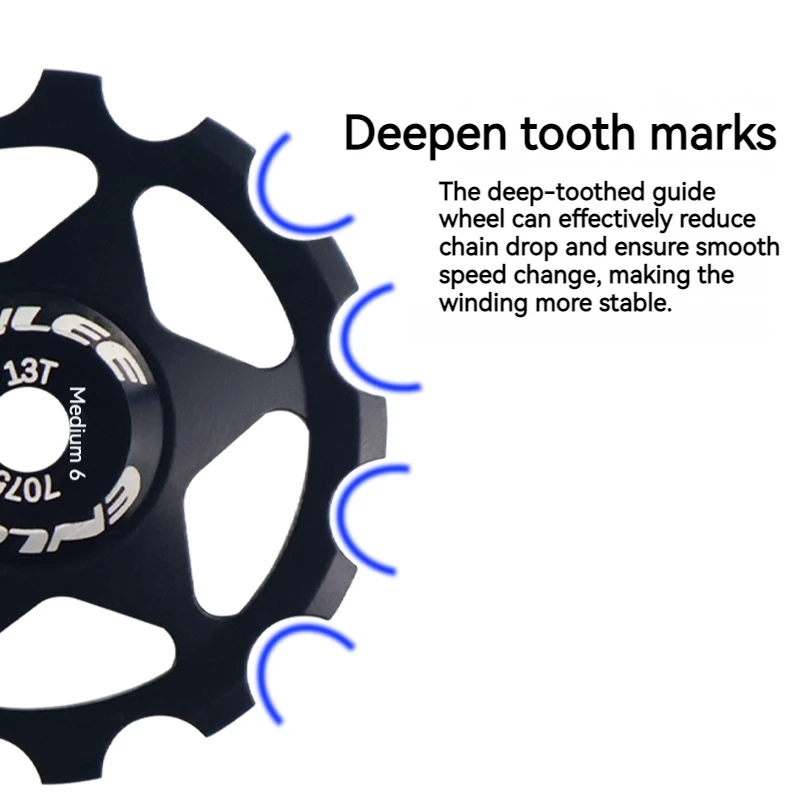
- CNC Machined Tooth ProfileOptimizes chain guide tracking and tensioning inside the derailleur cage.
Technical Specifications
| Brand | ENLEE |
| Material | Aluminum Alloy |
| Bearing Type | Ceramic Bearing |
| Tooth Count Options | 11T / 13T |
| Axle Diameter Fitment | 4mm / 5mm / 6mm (via adapter bushings) |
| Application | MTB / Road Bike Rear Derailleur Guide & Tension Wheel |
Pros & Cons
Pros
- Durable aluminum alloy body resists tooth wear better than standard plastic wheels.
- Ceramic bearing offers smooth rotational feel and strong corrosion resistance.
- Included conversion sleeves allow fitment on 4mm, 5mm, and 6mm derailleur bolts.
- Available in both 11-tooth and 13-tooth sizes to match different derailleur cage capacities.
Cons
- Requires checking derailleur cage clearance before opting for the larger 13T size.
- Aluminum teeth can generate slightly more mechanical chain noise than soft rubber/plastic pulleys if the drivetrain is dry.
- Specific internal bearing seal material and grease specifications are not detailed in available product data.
FAQ
It includes adapter bushings designed to fit 4mm, 5mm, and 6mm mounting bolt holes, making it compatible with most standard rear derailleurs. You should still measure your current derailleur bolt diameter before purchasing.
It is best to match the original tooth count of your stock pulley. Standard rear derailleurs typically take 11T pulleys. Switching to 13T requires verifying that your derailleur cage has sufficient clearance so the pulley does not rub against the body or cassette.
Yes, as long as the tooth count and bolt diameter match your derailleur cage configuration for both positions.
While ceramic balls do not rust, dirt can still accumulate in the dust covers over time. Periodic cleaning and light lubrication help maintain smooth performance.
Final Verdict
A solid component upgrade for cyclists seeking rigid aluminum construction and smooth ceramic bearings. Recommended for DIY mechanics needing a replacement pulley with multi-bolt adapter fitment. Skip if your derailleur requires floating upper guide pulleys or soft polymer sound-dampening teeth. Always verify your required tooth count (11T or 13T) and bolt size before ordering.