Problem & Solution
Creating strong, reliable electrical connections requires both proper heat transfer and an agent to clean surface oxidation during heating. Bare wire without flux often results in poor flow, cold solder joints, and clumpy connections that fail under stress.
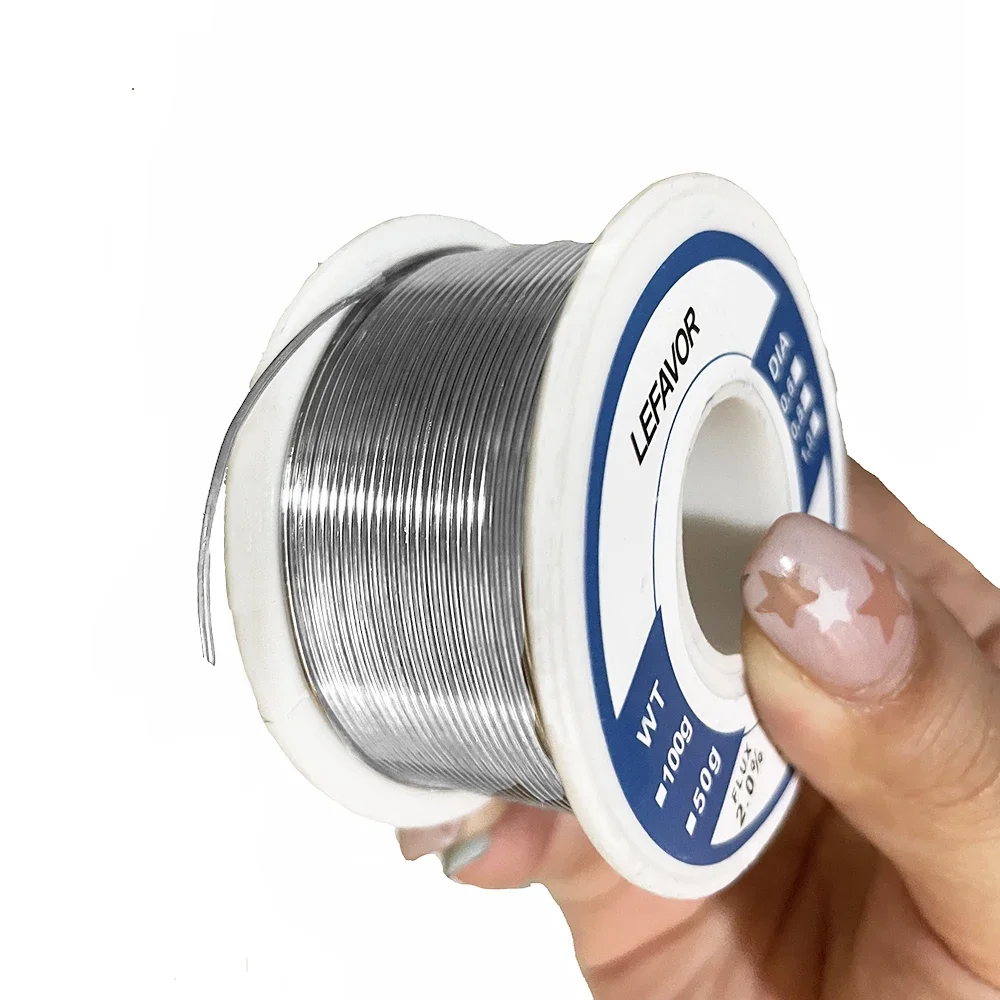
This soldering wire addresses joint formation by embedding a 2.0% rosin flux core directly inside the tin wire structure. As heat is applied, the inner rosin core melts first, cleansing the metal surfaces of mild oxidation before the surrounding tin melts and flows smoothly across the pad or lead.
Additionally, the integrated 'no-clean' flux formulation is engineered to leave behind minimal, non-conductive residue. This eliminates the tedious step of scrubbing circuit boards with solvent after making routine solder joints, saving time on multi-component assembly or quick repair jobs.
Who Is It For?
This rosin core solder wire roll is designed for electronics technicians, hobbyists, circuit board repairers, and automotive electrical DIYers. It suits anyone working on printed circuit boards (PCBs), joining stranded copper wires, or replacing damaged electronic components.
The choice between 0.8mm and 1.0mm gauges allows tailored selection: the 0.8mm option fits finer surface-mount or high-density pin soldering, while the 1.0mm version works well for general wiring, larger terminal lugs, and heavier joint work.
Key Features
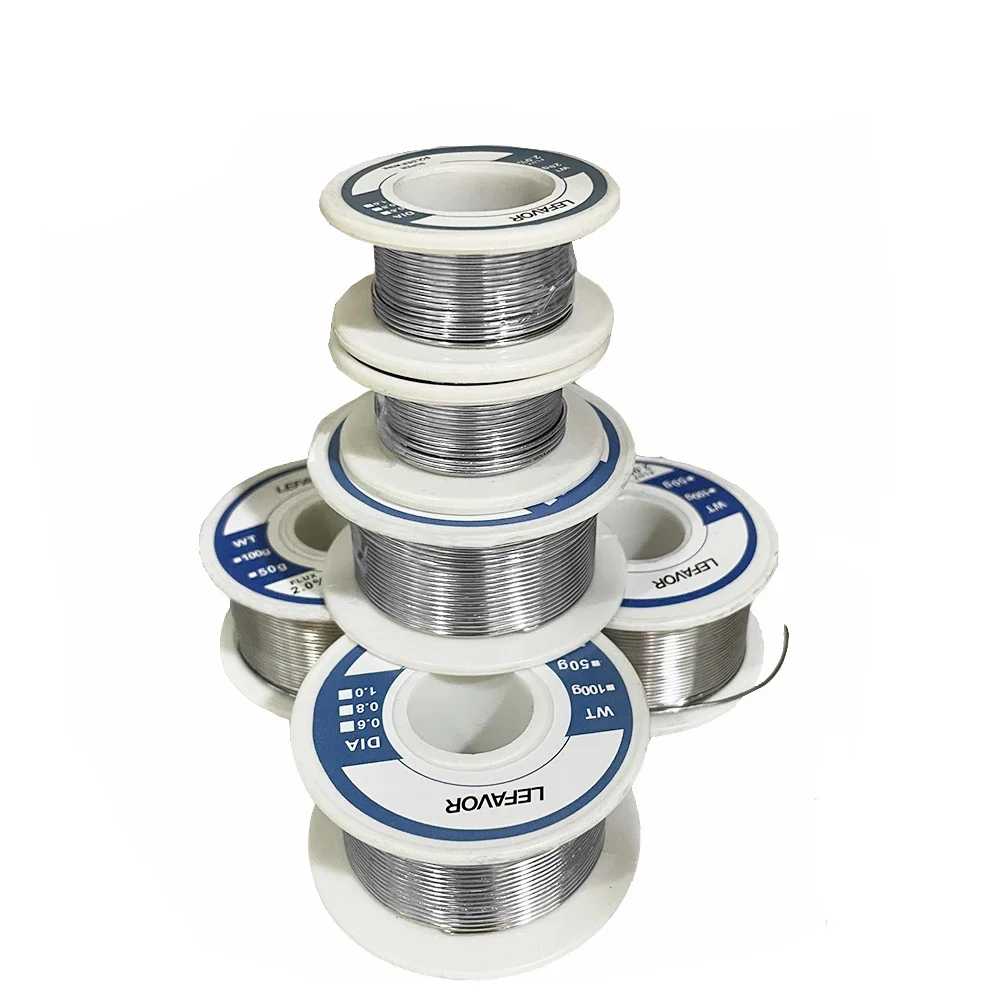
- Integrated Rosin CoreDelivers flux directly to the heating zone without separate paste application
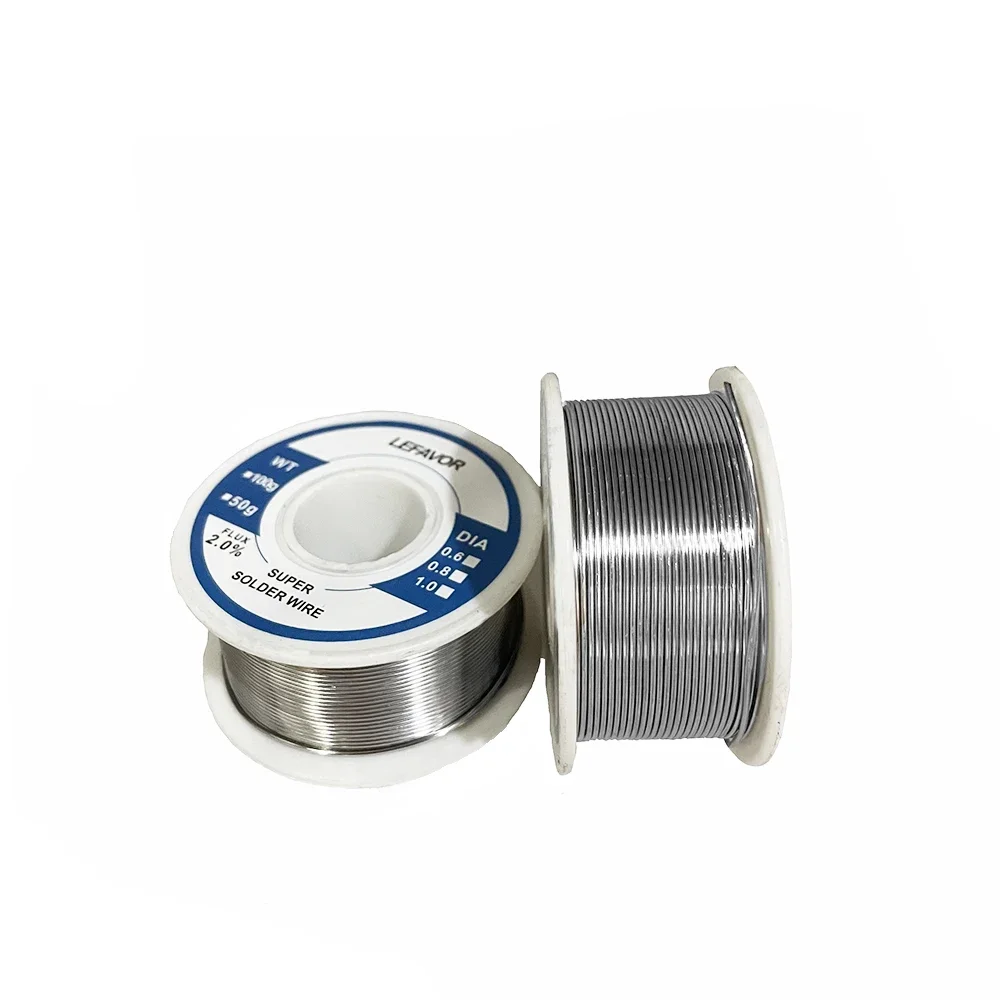
- 2.0% Flux ConcentrationProvides necessary surface-tension reduction for smooth melting and wetting
- No-Clean Flux FormulationLeaves non-corrosive, non-conductive residue that generally requires no post-solder washing
- 0.8mm & 1.0mm Wire Diameter OptionsAllows selection between precision component soldering and general electrical wiring
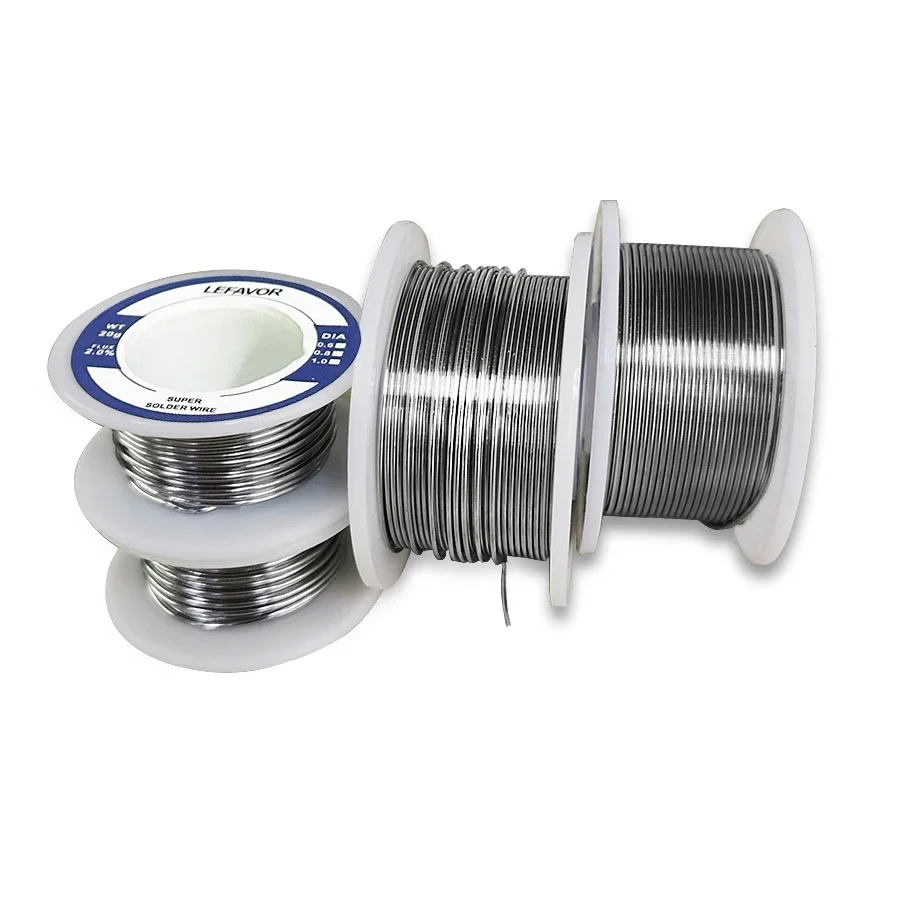
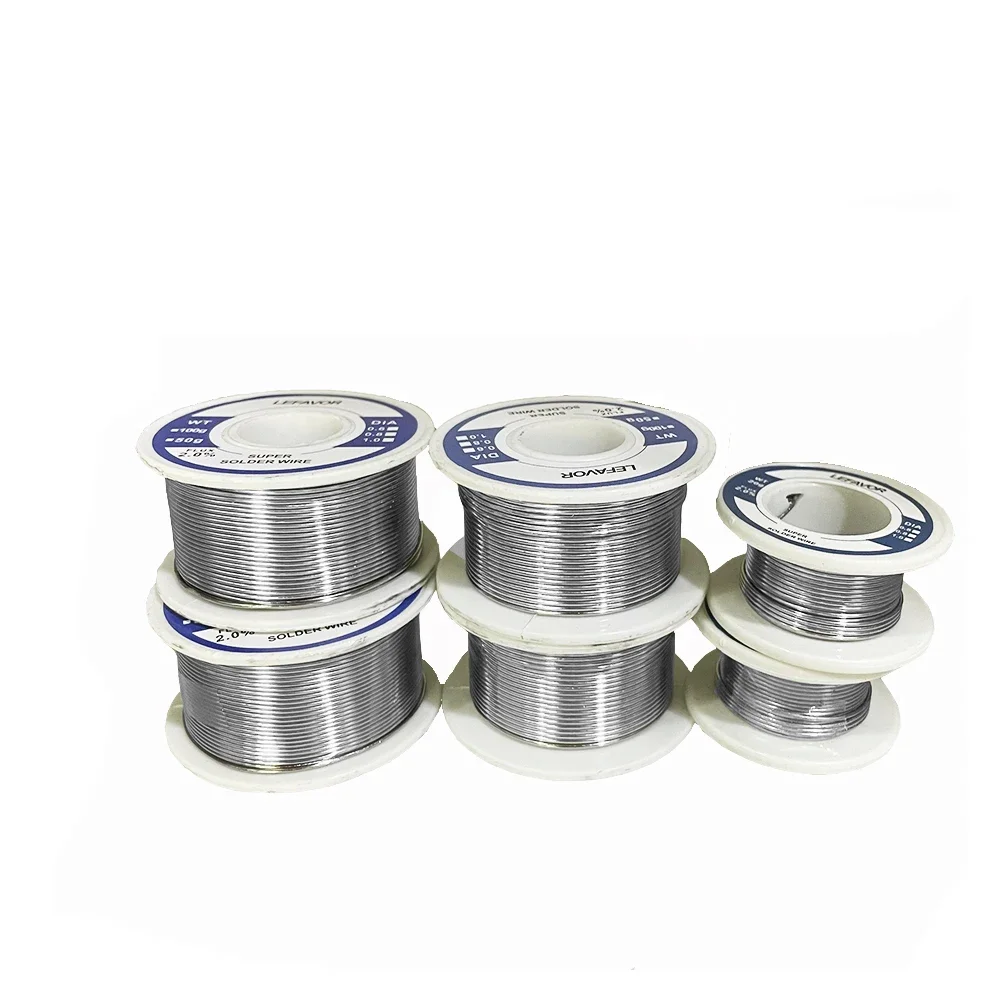
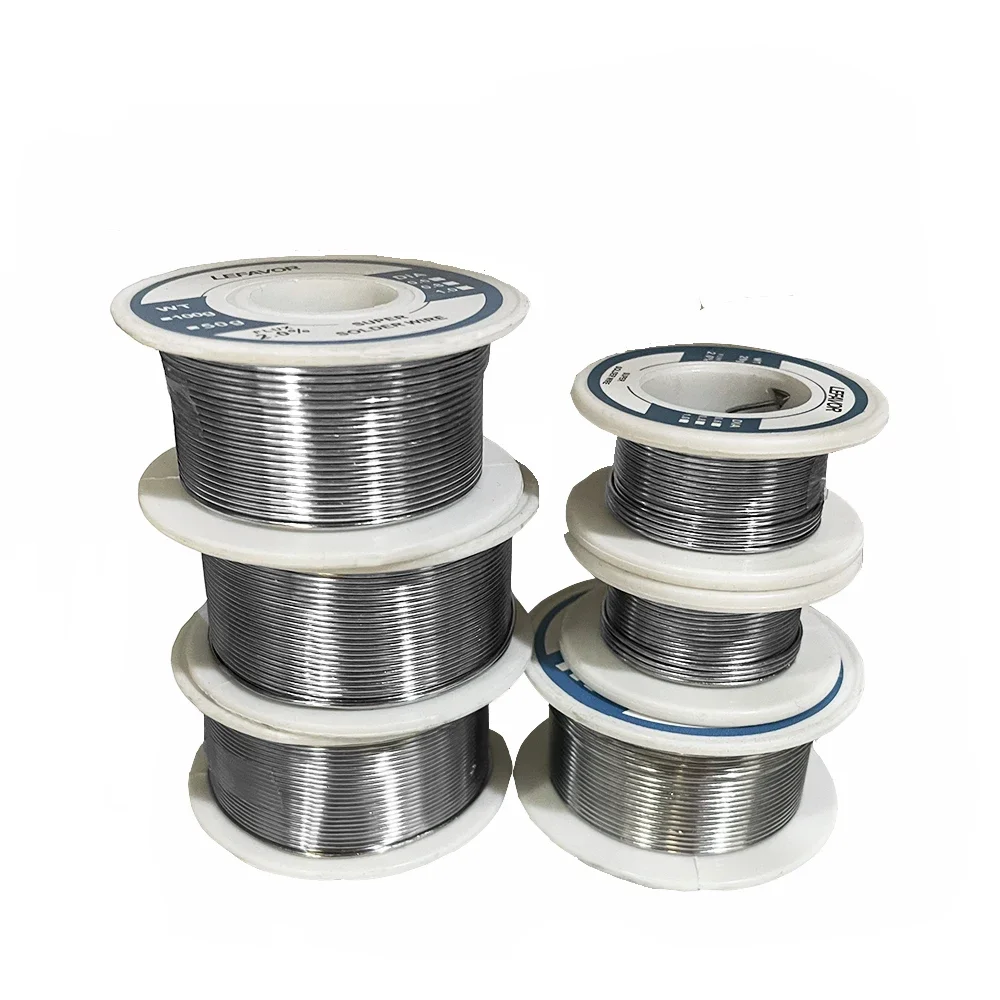
- 20g, 50g, and 100g Spool WeightsOffers compact sizes for portable toolkits alongside larger spools for benchtop use
Technical Specifications
| Available Wire Diameters | 0.8mm, 1.0mm |
| Available Spool Weights | 20g, 50g, 100g |
| Flux Content | 2.0% |
| Flux Type | Rosin Core / No-clean FLUX |
| Form Factor | Spool / Roll |
| Alloy Ratio | Not specified in available data |
Pros & Cons
Pros
- Available in two practical wire diameters for varied precision levels
- Rosin core design simplifies single-handed soldering operations
- Multiple spool weight options allow light portability or extended bench use
- No-clean flux characteristics reduce overall assembly and repair steps
Cons
- Exact elemental alloy composition (tin-to-lead or lead-free ratio) is not detailed in the primary listing data
- Heavy surface oxidation on older copper wires may still require supplemental paste flux
FAQ
0.8mm is generally better for delicate circuit boards, small IC pins, and tight component spacing. 1.0mm is ideal for larger wire splices, power connectors, and broader solder pads.
The wire uses a 2.0% no-clean flux formulation designed to leave benign, non-conductive residue. For standard applications, cleaning is optional, though critical high-frequency circuits may still benefit from isopropyl alcohol wiping.
For clean copper, tinned leads, and fresh pads, the internal 2.0% rosin core provides sufficient flux action. For severely oxidized wires or large ground planes, additional external flux may aid thermal transfer.
Final Verdict
A practical choice for general circuit board work and basic wire splicing. Recommend choosing 0.8mm for fine electronics work and 1.0mm for larger wiring projects, provided the exact metallic alloy ratio is not a strict regulatory constraint for your job site.